
GETTING AHEAD_____________________ Learning English through Technology
Visualizzazione post con etichetta On the farm. Mostra tutti i post
Visualizzazione post con etichetta On the farm. Mostra tutti i post
28.4.20
12.2.20
FOOD COMPOUNDS
"We are what we eat".
The food we eat consists of MACRONUTRIENTS (Carbohydrates, Proteins and lipids) and MICRONUTRIENTS (vitamins and minerals).
MACRONUTRIENTS supply us with energy.
- Carbohydrates
- Proteins
- Lipids
MICRONUTRIENTS
they help our body break down the macronutrients so that you can use the energy.
They are:
- Vitamins
- Mineral
- Water-Soluble vitamins play an important role in producing energy.
- B1, B2, B3, B5, B6, B7, B9, B12, C
- Fat-Soluble Vitamins
- A, D, E K
- Macrominerals have different functions for a healthy body.
- Calcium, Phosphorus, Magnesium, Sodium, Chloride, Potassium, Sulfur
- Trace Minerals enable important functions in the body.
- Iron, Manganese, Copper, Zinc, Iodine, Fluoride, Selenium
ANSWER THE QUESTIONS:
PART 1
1)What does the brain constitutional
nutritional content consist of?
2)What do these nutritional components
affect in the brain?
3)What are the feelings of post-lunch
apathy and late-night alertness (insomnia) usually caused by?
4)What can the regular assumption of 3
and 6 Omega fatty acids prevent in the brain?
5)What is the important role of 3 and 6
Omega fatty acids for the brain cells?
6)What food should we eat to supply our
brain with 3 and 6 Omega fatty acids?
7)What fats are dangerous
to men’s health and brain health?
5.2.20

27.1.20
SOIL
THE SOIL
Soil is one of the most important factors of all farming operations.
The soil is of paramount importance in all farming operations.
Soil is the basic factor in the food chain;
SOIL IS COMPOSED OF/ IS MADE OF:

- 45% of parent mineral matter
- 5% of organic matter (dead plants and animals, organic waste) and living organisms (worms, nematodes, bigger animals)
- 25% of water
- 25% of air (gases)
Soil is a complex body composed of five major components
- Mineral matter obtained by the disintegration and decomposition of rocks;
- Organic matter, obtained by the decay of plant residues, animal remains and microbial tissues;
- Organisms, both big (worms, insects) and small (microbes)
- Water, obtained from the atmosphere and the reactions in soil (chemical, physical and microbial);
- Air or gas, from the atmosphere, reactions of roots, microbes and chemicals in the soil

SOIL IS
1) USED TO PRODUCE BIOMASS
2) USED TO PROTECT THE ENVIRONMENT AND PRODUCE FOOD AND WATER
3) EXPLOITED AS SOURCE OF RAW MATERIAL
4) PROTECTED AS CULTURAL HERITAGE
SOIL DEGRADATION /SOIL DESTRUCTION
1) PHYSICAL DEGRADATION
- EROSION
- DESERTIFICATION
- WATER-LOGGING
- SOIL COMPACTION
- OVERGRAZING
- DEFORESTATION
2) BIOLOGICAL DEGRADATION
- CHANGES IN ANIMAL AND PLANT BIODIVERSITY
- INTENSIVE USE OF PESTICIDES
3) CHEMICAL DEGRADATION
- ACIDIFICATION
- ACID RAINS
- SALINIZATION
- CONTAMINATION
- HEAVY-METALS,
- NITROGEN, (helps above ground leaf growth
) - PHOSPHOROUS, (encourages plant cell divisions)
- POTASSIUM (increases plant resistance to diseases)
- TOXIFICATION
- EUTROPHICATION
10.9.19
First day of school

-What direct effects do the climatic changes bring about on Earth?

-Why is the Greenhouse effect becoming so dangerous and harmful to Earth?
The Greenhouse Effect from Extreme Ice Survey on Vimeo.

8.4.19


18.2.19

15.10.18
7.5.18


25.4.18
10.2.18

5.2.18
THE SOIL
SUMMARY of " SOIL COMPOSITION" page 74
Soil is one of the most important factors of all farming operations.
Soil is of paramount importance in all farming operation.
Soil is the basic factor in the food chain;
SOIL IS COMPOSED OF/ IS MADE OF:
- 45% parent mineral matter
- 5% organic matter (dead plants and animals, organic waste) and living organisms (worms, nematodes, bigger animals)
- 25% water
- 25% air (gases)
WHAT ARE THE IMPORTANT TASKS IN SOIL MANAGEMENT?
It is important to establish


It is important to establish
- the technical preconditions for the sowing of plants
- the removal of unwanted plants
- to create the optimum living conditions for every living thing in the soil; the organic farmers should recreate the conditions of INTENSIVE ROOTING in the soil and for LOOSENING UP COMPRESSION.

The roots are the key element to maintain the life in the soil.
- THE ROOTS absorb nutrients from the soil but at the same time they provide continuous secretions of minute particles/ substances to the soil
- Moreover, the intensive rooting in the soil makes the soil more friable and less compact. Thanks to the root action the compression in the soil is loosened up.
Introducing the rotation of crops, intercropping, sowing green fallow or feed mixture crops, farmers can build up a friable, living soil.

CROP ROTATION integrates the maintenance of a good, fertile soil with the needs of farmers related to both crop production and livestock breeding, according to ecological principles and repecting the environment.
9.1.18


18.12.17
PARMIGIANO REGGIANO Class 5th

It is produced in the region of Emilia Romagna.
It is a tasteful, digestible cheese, advised as baby food. It has got an unique delicate and tasteful flavour and fragrance.
It is produced with milk collected immediately after milking and partly skimmed by gravity. Cows are fed only with grass and hay and so the chees can assume its typical straw colour.
No additives are used during its processing phase.
Only natural whey culture and calf rennet are allowed.
Its long ageing process takes minimum 12 months up to 24/36 months and gives the cheese its unique taste, aroma and digestibility.The cheese assumes its full qualities after a period of 18/24months.
Its scaly internal structure is made of thin flakes radiating from, or converging towards the centre. its internal mass is mellow, soft, minutely granulated.
The unmistakable golden rind must be marked with the pin-dot writing. There have to be the registration number identifying the diary which manufactured the cheese, the date of production, and the oval trademark which guarantees that the cheese wheel has the legally prescribed characteristics.
The average cheese wheel weighs from 33 to 40 kgs.
To know more about Parmigiano Reggiano browse the follorwing link:
https://www.parmigianoreggiano.it/en/made/nutritional_features/details_nutritional_features_parmigiano_reggiano_1.aspx
28.11.17
Cheese Making class 5th
CHEESE MAKING

What is cheese?
Cheese is a preserved form of milk made by using live cultures to transform the milk through chemical processes, and then by the coagulation, pressing, and salting of the milk protein casein.
Cheese is popular for its versatility, longevity, and nutritional values. Cheese is a staple food with a longer shelf life than milk, and it is an affordable food for any budget. There are numerous styles, shapes, tastes, and textures of cheese, all developed in different regions, climates, and cultures of the world.
History
It is an ancient practice pictured in the murals of the Egyptian tombs.
 |
| http://www.sabor-artesano.com/gb/history-production-cheese.htm |
The making of cheese is described also in Homer’s Odyssey, a very early Grecian work of literature thought to date back to around the 8th century BCE.
Animal skins and internal organs were used frequently in the early days, so it is likely that some farmer merely filled an inflated animal stomach with milk to carry or store it for a time. The lining of animal stomach contains the enzymes used in cheesemaking even now, so maybe when the shepherd returned to retrieve his milk, or the hearth keeper went to pour milk for her cooking, the vessel was full of curds and whey. Drainage and salt are all that was needed to make this new, exciting food into what we know as cheese today.
CHEESEMAKING PROCESS
Traditionally, cheese is made by culturing milk either by encouraging natural enzymes and bacterial action (in raw milk) or by using the culture (in pasteurized milk).
A coagulant, such as rennet, lemon juice, or vinegar is then added, causing the milk protein casein to curdle and separate as a white, firm curd from the clear, watery whey.
The curd is then cut, using a specialized curd cutter, into smaller cubes (now curds), to be mashed and formed to a specific style. Next, the curds are drained and crumbled if used as a soft cheese, or spread (pressed), using a round cheese press.
Curds are compressed in a cheese press for as long as the specific style requires, then wrapped in some type of bandage or cloth, sometimes brined or rubbed in butter or lard, and put into a dark, cool environment to age naturally for as long as needed.
https://www.burnettdairy.com/about-us/cheese-making-process
27.11.17
20.11.17
Geenhouse effect (II part) class 4th

WHAT WILL HAPPEN?
The greenhouse effect will cause:
- an increase in Earth's temperature
- a change in weather conditions
- the ice at the Poles will melt,
- the sea level will rise,
- there will be a lot of floods,
- there will be droughts and many places will be too dry for farming
- there will be the problem of food
HOW CAN WE STOP IT?
It's important not to spread alarmism; we should send a positive message.
People should understand that we can't stop the greenhouse effect but we can slow it down.
People should act in a way so as to respect the environment. They should adopt the right behaviours at home and outdoors, every day
At school teachers should make their students aware of the problem of pollution, discuss solutions and learn what are the correct actions that should be taken to respect the natural environment.
Governments should take decisions, find measures and enact laws to preserve the natural environment.
The Greenhouse effect (I part) class 4th

Industries and wrong human habits are damaging the natural environment.
Because of pollution there are more and more gases in the atmosphere and the Earth's temperature is getting hotter and hotter.

The effect is similar to a greenhouse, that's why it is called "the greenhouse effect".


CARBON DIOXIDE:
 |
| http://www.noaa.gov/ |
It's the most important greenhouse gas.
Almost 6 billion tonnes enter the atmosphere every year.
It comes either from the burning of fossil fuels like coal, gas and oil or the burning of rain forest trees.
CHLORO- FLUORO-CARBONS:

 These gasses are in aerosol,sprays, refrigerators, plastic boxes and solvents.
They are very harmful both for human health and the natural environment.
They are the cause of the depletion the ozone layer.
Ozone depletion and the ozone hole generated worldwide concern over increased cancer risks and other negative effects. The ozone layer prevents most harmful UVB wavelengths of ultraviolet light (UV light) from passing through the Earth's atmosphere.
METHANE:
This colorless, odorless gas has huge potential as a fuel, but it also poses a major threat to the climate.
Methane is a natural substance produced through biological routes as well as technological processes or other synthetic means.
NITROUS OXIDE:

Nitrous oxide has significant medical uses, especially in surgery and dentistry, for its anaesthetic and pain reducing effects. Its name "laughing gas" is due to the euphoric effects upon inhaling it. Recently has been found to be a major scavenger of stratospheric ozone,
It is estimated that 30% of the N2O in the atmosphere is the result of human activity, chiefly agriculture.
THE DEPLETION OF THE OZONE LAYERS
16.11.17
Milk Products class5th

 CONDENSED MILK
It is made from pasteurized, concentrated milk to which sucrose is added to sweeten the concentrate to the extent of 65% in the final product. Sweetened condensed milk is not sterile but microbial growth is prevented by added sugar.
 POWERED MILK
Whole milk is dehydrated to the extent of 97% by spray drying* or vacuum drying. Skim milk and low-fat milk are also dehydrated to manufacture milk powder. Vitamins A and D are added to enhance the nutritive value. It has a long shelf-life and it turns into fluid milk by mixing it with the required amount of water.
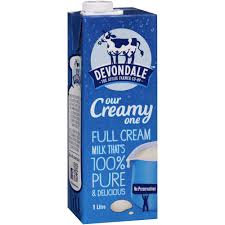 CREAM
CREAM
It is concentrated milk fat, it is formed as a layer of fat globules, which rise to the top in unhomogenized milk. The cream is separated from milk by centrifugation.
 YOGHURT
It is a fermented milk product with a fine curdled gel-like consistency having a sour and aromatic flavour.
*Spray drying is a
method of producing a dry powder from a liquid or slurry by rapidly drying with
a hot gas.
1.11.17
Alterations in climate and weather class4th


The atmosphere has been filled with carbon dioxide, methane and nitrous oxide.
The gaseous blanket surrounding the atmosphere has been thickened. (Greenhouse effect)
The Earth's heat is trapped in the atmosphere, increasing the Earth's temperature.
The rapid increase in the temperature will cause dangerous alterations to the weather and the global climate:
LONG PERIODS OF DROUGHTS
Desertification
Forests will be destroyed
Sahara will enlarge and reach Italy and Spain
The Nile delta will disappear
Water shortages
PROLONGED HEAVY PRECIPITATIONS
STORMS/TORNADOES/HURRICANES
floods
Iscriviti a:
Post (Atom)